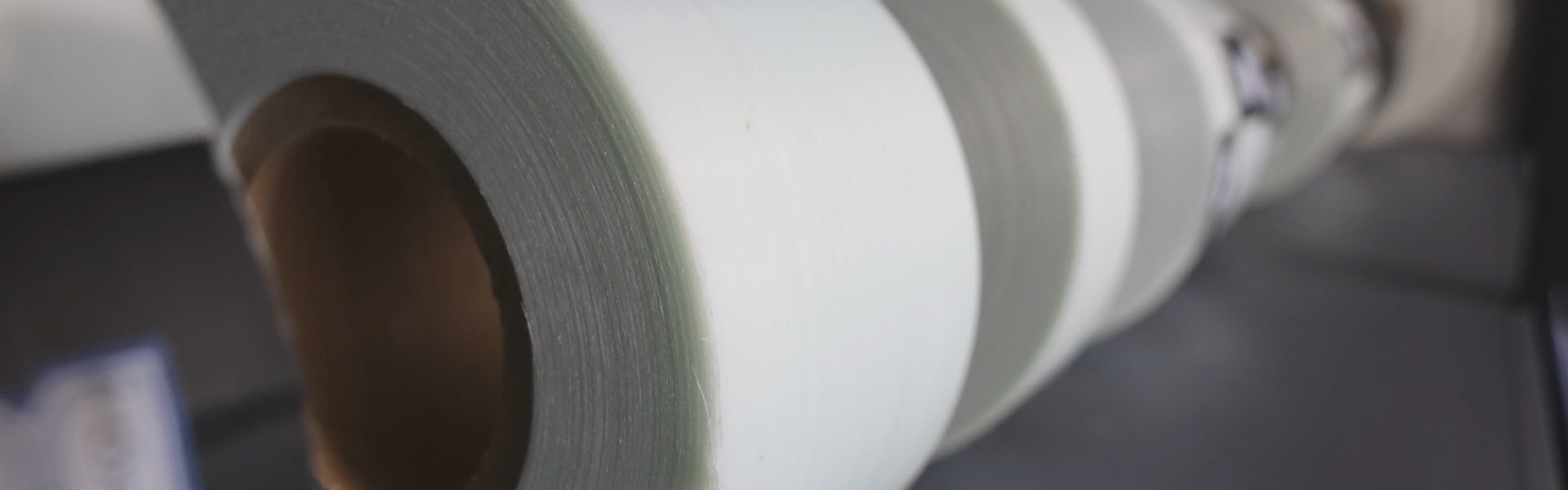
Study on the Structural Safety and Lightweight Application of CFRT Prepreg Unidirectional Tapes in Pressure Vessels and Pipeline Systems
Release time:
2026-01-23
Author:
Source:
1. Introduction
Pressure vessels and pipeline systems occupy a core position in energy, chemical engineering, petroleum and natural gas, and industrial equipment fields. Their operational safety is directly related to equipment stability, production safety, and environmental protection. Traditional metal materials, despite their high strength and stiffness, face drawbacks such as heavy weight, susceptibility to corrosion, limited fatigue life, and high maintenance costs when operating under high pressure, high temperature, and corrosive medium conditions. Especially under high pressure or special medium environments, metal pipelines are prone to local stress concentration, crack propagation, and even sudden failure risks.
With the modern industry moving toward high efficiency, lightweighting, and high safety, the application potential of composite materials—especially Continuous Fiber-Reinforced Thermoplastic (CFRT) prepreg unidirectional tapes—in pressure vessels and pipeline systems has become increasingly prominent. Relying on the high specific strength and high specific stiffness of continuous fibers, as well as the toughness and corrosion resistance of the thermoplastic matrix, CFRT provides a technical path that balances lightweight design and safety redundancy for pressure vessels and pipelines.
Based on the service requirements of pressure vessels and pipeline systems, this paper systematically analyzes the structural safety advantages, lightweight design logic, fatigue and durability performance, manufacturing processes, and engineering application experience of CFRT prepreg unidirectional tapes, exploring their application value and future development directions in high-pressure systems.
2. Performance Requirements of Pressure Vessels and Pipeline Systems
During operation, pressure vessels and pipelines bear main loads including internal pressure, external pressure, axial tension-compression, and thermal stress caused by temperature gradients. Their service environments are complex and variable, possibly involving high temperature, high pressure, corrosive media, and vibration loads. Materials must not only meet strength and stiffness requirements, but also ensure long-term fatigue life and corrosion resistance, while possessing predictable failure modes to guarantee safety.
Safety redundancy is an important concept in pressure system design. Even if local structural damage occurs, the overall vessel or pipeline should maintain sufficient load-bearing capacity to avoid sudden disasters. Traditional metal materials usually exhibit brittle fracture when locally damaged, while CFRT materials achieve progressive local damage through the synergy of continuous fibers and a tough matrix, providing a time window for monitoring and maintenance.
In addition, lightweighting is also a core requirement of modern industry for pressure systems. Reducing the structural weight of pipelines and vessels not only lowers installation and transportation costs, but also improves system dynamic response performance and energy efficiency.
3. Material Characteristics and Structural Advantages of CFRT Prepreg Unidirectional Tapes
CFRT prepreg unidirectional tapes are composed of continuous fibers and a thermoplastic resin matrix, and their material structure determines their advantages in pressure vessel and pipeline applications. Continuous fibers are arranged along specific directions, enabling precise bearing of axial and hoop stresses and directional optimization of mechanical properties. For cylindrical pressure vessels or curved pipelines, laying fibers along the main stress direction can significantly improve the structural safety factor.
The thermoplastic matrix provides the structure with toughness and impact resistance, while also having corrosion resistance and chemical medium resistance. In high-pressure medium environments, the thermoplastic matrix can isolate internal media from eroding fibers, delaying material aging and crack propagation. In addition, the reheatable and repairable characteristics of the thermoplastic matrix enable local damage repair, improving the maintenance convenience of pressure systems.
The high specific strength and high specific stiffness of CFRT allow pressure vessels and pipelines to achieve significant weight reduction under the same safety level, providing technical support for the lightweighting of industrial systems.
4. Structural Safety and Failure Mode Analysis
In pressure vessels and pipeline systems, main failure modes include burst, local instability, fatigue crack propagation, and leakage caused by corrosion. Through optimized laying of continuous fibers along stress paths, CFRT materials can alleviate local stress concentration. Even if microcracks appear locally, the synergy between fibers and the tough matrix can slow down crack propagation speed, showing progressive failure rather than brittle fracture.
Furthermore, through multi-directional layup design, CFRT structures can form multiple load transfer paths, enhancing safety redundancy. When local parts of the vessel bear overpressure or impact loads, surrounding layups can bear part of the load, thereby preventing overall failure. This controllable failure mode cannot be achieved by traditional metal materials.
5. Lightweight Design and Engineering Value
The lightweighting of pressure systems is not only reflected in the weight reduction of individual components, but also has a profound impact on the efficiency and economy of the entire industrial system. Through the combination of continuous fibers and a thermoplastic matrix, CFRT materials significantly reduce the weight of vessels and pipelines of the same strength grade. Direct benefits brought by weight reduction include lower transportation and installation costs, as well as reduced load on supporting structures.
In high-pressure pipeline systems, weight reduction also means more flexible pipeline layout and reduced load on supporting structures and foundations. In pressure vessel applications, weight reduction can improve storage and transportation efficiency, reduce energy consumption, and provide more design space for safety redundancy design.
6. Guarantee Role of Manufacturing Processes for Pressure System Performance
CFRT prepreg unidirectional tapes can be used to prepare high-strength pressure vessel and pipeline structures through continuous tape laying, winding, and hot pressing molding processes. The automated winding process can control fiber laying angle, tension, and number of layers, achieving high-precision manufacturing of cylindrical and spherical pressure vessels. The thermoplastic molding process ensures full combination of fibers and matrix, forming a dense and uniform structure, and improving load-bearing capacity and fatigue life.
Modular manufacturing combined with on-site assembly enables key structural parts of large-diameter pipelines and long-section pressure vessels to be prefabricated in factories, with rapid on-site installation, improving construction efficiency and quality controllability.
7. Corrosion and Medium Adaptability
CFRT materials exhibit significant advantages in highly corrosive media. Continuous fibers themselves do not participate in chemical reactions, and the thermoplastic matrix isolates medium intrusion, enabling long-term resistance to corrosion by acids, alkalis, salt water, and various chemical substances. In seawater transportation, chemical storage and transportation, and oil and gas pipeline systems, CFRT pipelines and vessels can greatly reduce maintenance frequency and leakage risks caused by corrosion.
Corrosion resistance makes the long-term reliability of CFRT far exceed that of traditional metal materials in special environments, providing a solid guarantee for industrial system safety.
8. Fatigue Performance and Long-Term Reliability Analysis
During operation, pressure vessels and pipelines bear cyclic internal pressure, temperature changes, and operational vibrations. The continuous fiber structure of CFRT materials can evenly distribute stress, and the thermoplastic matrix absorbs local energy, delaying the initiation and propagation of fatigue cracks. Compared with metal materials, CFRT exhibits more stable fatigue performance in high-cycle pressure environments.
This long-term reliability provides a reliable basis for extending the maintenance cycle of industrial equipment and reducing downtime, and lowers the total life-cycle cost of the system.
9. Engineering Application Cases and Experience
In the petrochemical industry and natural gas transportation fields, CFRT prepreg unidirectional tapes have been used in the manufacture of small-diameter high-pressure pipelines and storage and transportation vessels. By optimizing fiber laying angle and number of layers, engineers can achieve the effect of meeting design pressure grades while significantly reducing pipeline weight.
In practical applications, CFRT materials also solve local damage problems through the repair capability of the thermoplastic matrix, enabling pipelines and vessels to have maintainability during service and significantly improving system safety redundancy.
10. Economic Efficiency and Full-Life-Cycle Benefits
Although the initial cost of CFRT materials is higher than that of traditional metals, the overall economic benefits are significantly improved through reduced transportation and installation costs brought by lightweighting, extended maintenance cycles, and prolonged service life. In high-pressure and corrosive environments, CFRT vessels and pipelines can significantly reduce downtime and maintenance costs, thereby achieving a balance between economy and safety throughout the life cycle.
11. Technical Challenges and Engineering Paths
The application of CFRT in pressure systems still faces challenges such as design specifications, standardized verification, and evaluation of long-term service performance under high-temperature and high-pressure conditions. In the future, it is necessary to establish a complete engineering design process through material standardization, simulation, experimental verification, and digital manufacturing technologies to ensure the reliability of CFRT vessels and pipelines under extreme working conditions.
12. Future Development Trends
The future application of CFRT prepreg unidirectional tapes in pressure vessels and pipeline systems will move toward multi-functionalization and integration. By integrating load-bearing, corrosion resistance, flame retardancy, and sensor monitoring functions, a comprehensive solution with high safety, high reliability, and lightweight design can be achieved. At the same time, with the maturity of intelligent manufacturing and digital twin technologies, the design, manufacturing, operation, and maintenance of CFRT pressure systems will become more efficient and controllable.
13. Conclusion
CFRT prepreg unidirectional tapes provide an advanced material solution for pressure vessels and pipeline systems that balances structural safety, corrosion resistance, lightweight design, and long-term reliability. The synergy between the high specific performance of continuous fibers and the toughness of the thermoplastic matrix enables pressure systems to have stable performance in high-pressure, highly corrosive, and cyclic load environments. With the development of engineering technology and the accumulation of application experience, the promotion of CFRT in the field of industrial high-pressure systems will become an important path to achieve high-efficiency, safe, and lightweight equipment.
Key words:
Recommended News