
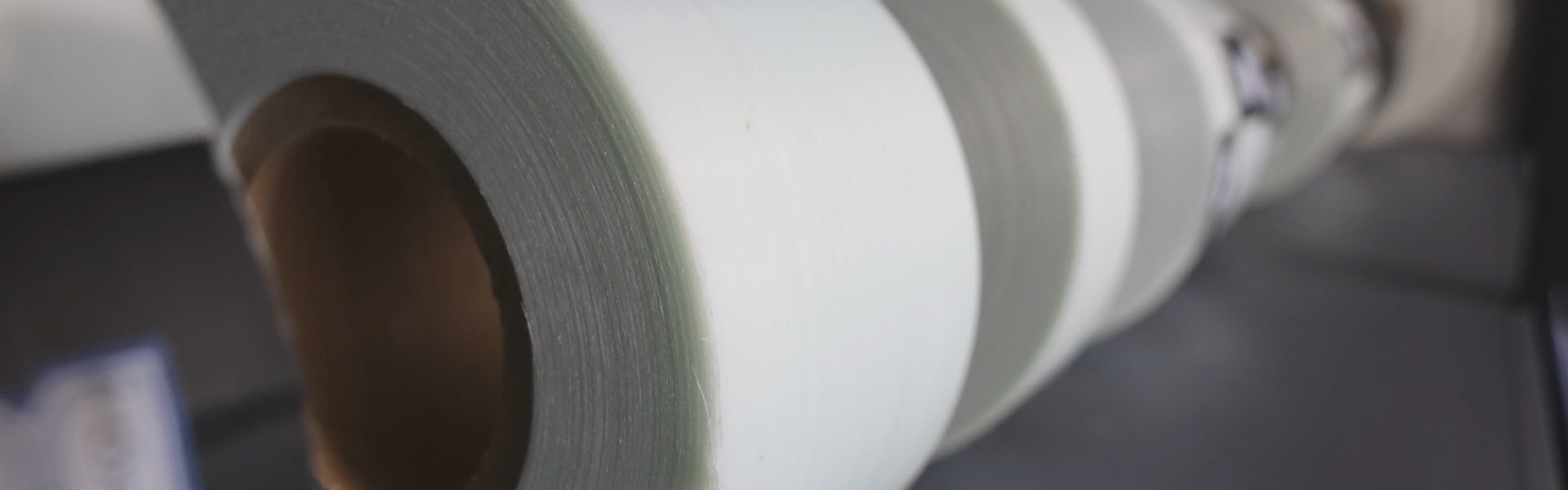
Research on the Flame Retardant Safety and Lightweight Synergistic Application of CFRT Prepreg Unidirectional Tape in Aircraft Interiors and Cabin Structures
Release time:
2026-01-14
Author:
Source:
1. Introduction
In the aviation industry system, material selection has always revolved around three core objectives: safety, lightweighting, and reliability. Compared with primary load-bearing structures such as wings and fuselages, aerospace interiors and cabin structures do not directly bear flight loads, but their safety attributes are equally critical. Once cabin structures fail under extreme conditions, they will directly threaten occupant safety. Especially in scenarios such as fires, impacts, and emergency landings, material performance often becomes a key determinant of the severity of accident consequences.
With the development of aircraft toward larger sizes, longer ranges, and higher-frequency operations, the mass proportion of the aerospace interior system continues to increase. Traditional metal materials and thermosetting composites have gradually shown limitations in flame retardancy, weight control, manufacturing efficiency, and maintenance convenience. Continuous Fiber-Reinforced Thermoplastic (CFRT) prepreg unidirectional tapes, with their high specific performance, designability, and excellent flame-retardant modification potential, are emerging as important candidates in the material system for aerospace interiors and cabin structures.
Starting from the functional requirements of aerospace interiors and cabin structures, this paper systematically analyzes the technical advantages of CFRT prepreg unidirectional tapes in flame-retardant safety, lightweighting, and structural reliability, and discusses their development direction in the future aviation manufacturing system in combination with engineering application logic.
2. Performance Demand Characteristics of Aerospace Interiors and Cabin Structures
Aerospace interiors and cabin structures cover a wide range, including bulkheads, floor beams, seat support structures, luggage racks, and functional partitions. Although these structures are not primary load-bearing components, they need to withstand vibration, impact, and passenger loads for a long time during flight, and assume energy absorption and protection functions under emergency conditions.
Among them, flame retardancy and low-smoke low-toxicity performance are one of the most core requirements for aerospace interior materials. In the enclosed cabin environment, the combustion behavior of materials under high temperature or fire source directly affects the time for personnel evacuation. Materials not only need to have flame retardancy, but also must minimize the release of smoke and toxic gases during combustion.
In addition, with airlines attaching importance to operational cost control, the lightweighting of interior systems has become an important way to improve fuel efficiency and reduce carbon emissions. Although the proportion of interior structures in the total aircraft mass is small, systematic weight reduction can still bring significant economic and environmental benefits.
3. Material Characteristics of CFRT Prepreg Unidirectional Tapes and Aviation Adaptability
CFRT prepreg unidirectional tapes are composed of continuous fibers and a thermoplastic resin matrix, and their material structure determines their unique advantages in the aerospace interior field. Continuous fibers provide high specific strength and specific stiffness, enabling the material to significantly reduce weight while maintaining sufficient load-bearing capacity. This characteristic is very suitable for use in cabin beams, frames, and support structures.
The thermoplastic resin matrix provides the material with good toughness and impact energy absorption capacity. In emergency landing or turbulence impact conditions, CFRT structures can absorb energy through progressive deformation, reducing the impact risk to occupants. This failure mode is safer and more controllable than traditional brittle materials.
In terms of flame retardancy, thermoplastic resins have good formula regulation space. By introducing a flame-retardant modification system, CFRT materials can meet the flame-retardant, low-smoke, and low-toxicity requirements specified by aviation standards while satisfying mechanical performance requirements, providing a technical basis for their application inside the cabin.
4. Technical Implementation Paths for Flame Retardancy and Safety Performance
The flame retardancy of aerospace interior materials is not a single indicator, but a comprehensive performance system. In this system, CFRT prepreg unidirectional tapes achieve safety goals through the synergy of material structure and matrix modification. Continuous fibers themselves do not participate in combustion, and can maintain structural integrity under fire sources, gaining time for occupant evacuation.
Through the design of the flame-retardant system, the thermoplastic matrix forms a stable carbon layer at high temperatures, isolating heat and oxygen and inhibiting flame spread. At the same time, the amount of smoke and toxic gases released during matrix decomposition can be controlled at a low level, reducing harm to the cabin environment.
This dual mechanism of "structural retention + combustion inhibition" gives CFRT unique advantages in the aerospace interior safety system. Compared with traditional materials that simply rely on coatings or external flame-retardant treatments, CFRT achieves the internalization of flame-retardant performance at the material level.
5. Lightweight Design Logic and Structural Synergy
The lightweighting of aerospace interior structures is not simply thinning or weakening strength, but is realized through the in-depth synergy of structural design and material performance. The unidirectional fiber structure of CFRT prepreg unidirectional tapes allows engineers to accurately arrange material performance according to the load path, laying fibers along the main stress direction to avoid invalid load-bearing.
In bulkhead and floor beam structures, CFRT can achieve stiffness matching in different directions through the combination of multiple layers of unidirectional tapes. This design method enables the structure to significantly reduce material consumption while meeting safety and stiffness requirements.
Compared with traditional metal interior structures, CFRT structures can achieve significant weight reduction under the same load-bearing capacity, thereby reducing the take-off weight of the entire aircraft and having a positive impact on range and fuel efficiency.
6. Supporting Role of Manufacturing Processes in Aviation Quality
The aviation field has extremely high requirements for manufacturing consistency and quality stability. CFRT prepreg unidirectional tapes can achieve high-precision and repeatable structural manufacturing through automated tape laying and hot pressing molding processes. The laying path, number of layers, and tension of continuous fibers can all be controlled through digital systems to ensure highly consistent structural performance.
The rapid curing characteristics of the thermoplastic molding process help shorten the manufacturing cycle and improve production efficiency. This advantage is particularly obvious in the mass production of aerospace interiors. At the same time, thermoplastic materials still have secondary heating molding capabilities after molding, providing more flexibility for the modular design and assembly of interiors.
7. Typical Application Scenarios in Aerospace Interior Structures
In practical applications, CFRT prepreg unidirectional tapes can be used in a variety of aerospace interiors and cabin structures. Cabin partitions and bulkhead structures are one of the most representative application scenarios. These structures need to have sufficient stiffness to carry auxiliary equipment, and must meet strict flame-retardant and safety requirements.
Seat supports and luggage rack structures are also suitable for CFRT materials. Continuous fibers provide load-bearing capacity, and the thermoplastic matrix provides toughness and damping, enabling the structure to maintain stable performance under flight vibration and impact conditions.
In these applications, CFRT materials not only achieve lightweight goals, but also reduce the number of parts through structural integration, improving system reliability.
8. Synergistic Improvement of Comfort and Structural Performance
The performance of aerospace interior structures is not only reflected in the safety level, but also directly affects ride comfort. Structural vibration and noise are important factors affecting cabin experience. The damping characteristics of CFRT materials help inhibit vibration transmission and reduce structural noise.
Compared with metal structures, CFRT interior components have lower resonance amplitude under vibration excitation, helping to improve the acoustic environment inside the cabin. This performance improvement is particularly important in long-range flights and has a positive impact on occupant comfort.
9. Economy and Sustainability from a Full-Life-Cycle Perspective
From a full-life-cycle perspective, CFRT prepreg unidirectional tapes have good economic and environmental benefits in the aerospace interior field. Fuel savings brought by lightweighting can offset the initial material cost in long-term operations. At the same time, the recyclability of thermoplastic materials provides the possibility of material reuse after aircraft decommissioning.
Against the background of the gradual development of the aviation industry toward low-carbonization and sustainability, this material characteristic endows CFRT with long-term application value.
10. Technical Challenges and Engineering Paths
Although CFRT has significant advantages in the aerospace interior field, its engineering application still needs to face challenges such as material certification, process stability, and cost control. These problems are expected to be gradually solved through standardized design processes, improved test and verification systems, and large-scale production.
With the accumulation of aviation material certification experience, the application scope of CFRT in interiors and secondary load-bearing structures will continue to expand.
11. Future Development Trends
In the future, the development of CFRT prepreg unidirectional tapes in the aerospace interior field will focus more on multi-functional integration and systematic design. Flame retardancy, energy absorption, vibration reduction, and structural load-bearing functions will be realized through the synergy of material and structural design, providing more efficient and safer interior solutions for the next generation of aircraft.
12. Conclusion
CFRT prepreg unidirectional tapes provide an advanced material solution for aerospace interiors and cabin structures that balances flame-retardant safety, lightweighting, and comfort. Through the synergy of the efficient load-bearing capacity of continuous fibers and the designability of the thermoplastic matrix, CFRT is promoting the transformation of aerospace interior structures from traditional material systems to high-performance composite material systems. With the improvement of technical maturity, its application prospects in the aviation field will become increasingly broad.
Key words:
Recommended News


Factory address:
North of Chuangye Road, Feicheng Hi-Tech Zone, Tai'an City, Shandong Province, China