
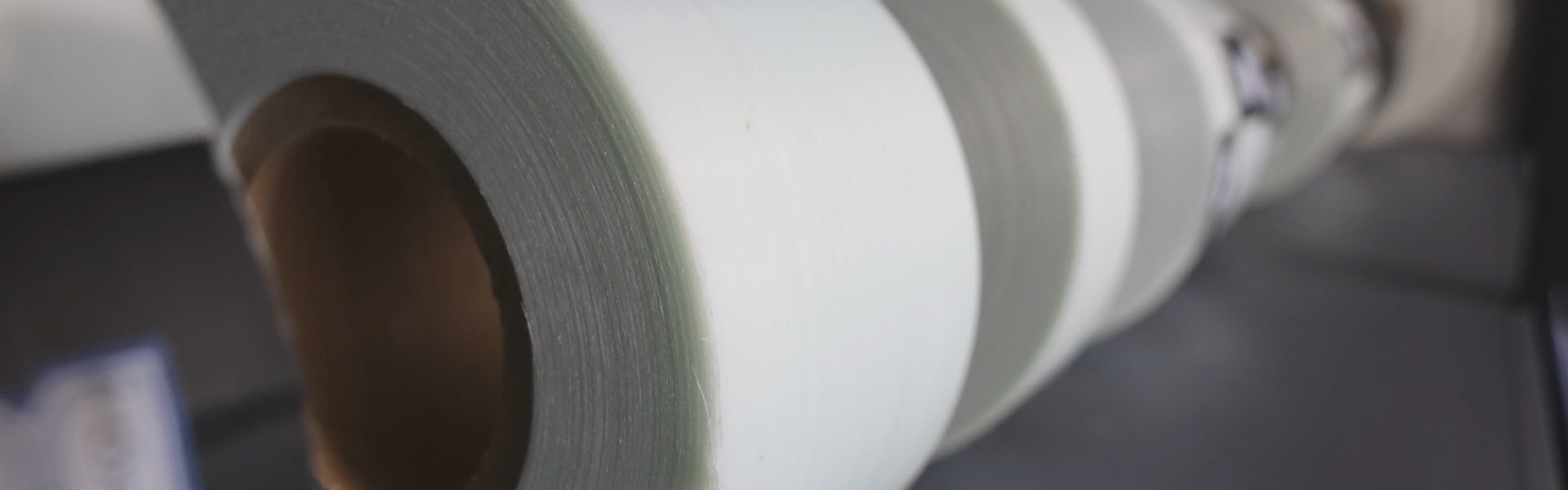
Study on the Corrosion Resistance and Lightweight Collaborative Application of CFRT Prepreg Unidirectional Tape in Ship and Offshore Engineering Structures
Release time:
2026-01-14
Author:
Source:
1. Introduction
In the field of marine and offshore engineering equipment, material performance has always been a core factor affecting structural safety, service life, and operational costs. The marine environment is characterized by high humidity, high salt spray, strong ultraviolet radiation, and long-term alternating loads, posing severe challenges to traditional structural materials. Although metal materials have mature engineering application experience, their problems such as susceptibility to corrosion, high maintenance costs, and large weight have become increasingly prominent, gradually becoming important factors restricting the performance improvement of marine and offshore engineering equipment.
Against this backdrop, high-performance composite materials have begun to be applied in ship deck structures, superstructures, cabin separation structures, and secondary load-bearing components of offshore platforms. Continuous Fiber-Reinforced Thermoplastic (CFRT) prepreg unidirectional tapes, with their excellent corrosion resistance, high specific strength, and good structural design freedom, provide a new material solution for marine and offshore engineering equipment that balances durability and lightweighting.
This paper systematically analyzes the service environment characteristics of marine and offshore engineering equipment, expounds the technical advantages of CFRT prepreg unidirectional tapes in corrosion resistance, fatigue resistance, and structural lightweighting, and discusses the design logic and development trends in their engineering applications.
2. Service Environment Characteristics of Marine and Offshore Engineering Equipment Structures
Marine and offshore engineering equipment operate in complex and harsh marine environments for a long time. Materials must not only bear static and dynamic loads, but also withstand continuous environmental erosion. Salts and dissolved oxygen in seawater will cause continuous corrosion to metal structures, especially in welds and connection areas where corrosion problems are more serious.
At the same time, wave loads, wind loads, and equipment operation loads will introduce long-term alternating stresses into the structure. Materials need to have good fatigue performance to ensure long-term service safety. For high-speed ships and large offshore platforms, quality control of superstructures and auxiliary structures is particularly important, as excessive structural weight will significantly affect stability and energy consumption.
Under such an environment with overlapping multiple requirements, the performance boundaries of traditional material systems have gradually become apparent, creating a practical demand for the introduction of new composite materials.
3. Material Structural Advantages of CFRT Prepreg Unidirectional Tapes
CFRT prepreg unidirectional tapes are composed of continuous fibers and a thermoplastic resin matrix, and their material structure is naturally suitable for marine environment applications. Continuous fibers provide an efficient load transfer path, enabling the material to achieve high load-bearing capacity with low quality, a characteristic that is particularly important for ship superstructures.
The thermoplastic resin matrix has excellent hydrolysis resistance and chemical corrosion resistance, maintaining stable performance in long-term salt spray and humid environments, and will not undergo electrochemical corrosion like metal materials. This enables CFRT structures to significantly reduce maintenance frequency and usage costs in marine environments.
In addition, CFRT materials exhibit a more moderate failure mode when structural failure occurs, and are not prone to sudden fracture, providing higher structural safety redundancy for marine and offshore engineering equipment.
4. Key Value of Corrosion Resistance in Offshore Engineering Applications
Corrosion resistance is one of the most competitive advantages of CFRT prepreg unidirectional tapes in marine and offshore engineering equipment. Since continuous fibers themselves do not participate in corrosion reactions, and the thermoplastic matrix can effectively isolate the intrusion of moisture and salts, CFRT structures experience minimal performance degradation during long-term service.
This inherent corrosion resistance allows CFRT structures to meet usage requirements without relying on heavy anti-corrosion coatings, thereby reducing the complexity of the material system and the workload of later maintenance. This advantage is particularly prominent in scenarios that are difficult to maintain frequently, such as offshore platforms.
5. Impact of Lightweight Design on Ship Performance
The lightweighting of marine and offshore engineering equipment is not only related to material costs, but also directly affects navigation performance and energy efficiency. Reducing structural quality can improve ship stability, increase cargo capacity, and reduce propulsion system energy consumption.
CFRT prepreg unidirectional tapes achieve directional enhancement of mechanical properties through unidirectional fiber laying, concentrating material performance on the main stress direction and avoiding the introduction of invalid mass. This design method enables engineers to minimize material usage while meeting structural strength requirements.
In ship superstructures and deck structures, the application of CFRT materials can effectively lower the center of gravity, thereby improving the overall stability and safety of the ship.
6. Guarantee of Structural Reliability by Manufacturing Processes
CFRT prepreg unidirectional tapes can achieve high-consistency manufacturing through automated tape laying and hot pressing molding processes, which is of great significance for the structural reliability of marine and offshore engineering equipment. Precise control of the continuous fiber laying path makes structural performance more predictable, reducing the quality fluctuations common in traditional hand lay-up processes.
The thermoplastic molding process also endows the structure with good welding and secondary molding capabilities, enabling large structural components to be manufactured and assembled in a modular manner. This manufacturing model helps improve construction efficiency and shorten the construction cycle of ships and offshore engineering equipment.
7. Application Scenarios of CFRT in Typical Ship Structures
In practical engineering, CFRT prepreg unidirectional tapes can be widely used in ship superstructures, deck partitions, cabin structures, and equipment support components. Although these structures do not directly participate in main load-bearing, their quality and durability have an important impact on the overall ship performance.
By applying CFRT materials to these parts, system-level lightweighting and corrosion resistance improvement can be achieved without changing the main hull structure, which has good engineering feasibility.
8. Fatigue Performance and Long-Term Reliability Analysis
Marine and offshore engineering equipment bear alternating loads for a long time during service, so material fatigue performance is crucial. CFRT materials exhibit a relatively gentle performance attenuation curve under fatigue loads, and continuous fibers can effectively disperse stress concentration and delay crack propagation.
This performance characteristic enables CFRT structures to maintain stable mechanical properties during long-term operation, providing a guarantee for the safe operation of offshore engineering equipment.
9. Full-Life-Cycle Economy and Maintenance Advantages
From a full-life-cycle perspective, the application of CFRT prepreg unidirectional tapes in marine and offshore engineering equipment has obvious economic advantages. Although the initial material cost may be higher than that of traditional metals, their corrosion resistance and low maintenance requirements can significantly reduce long-term operating costs.
At the same time, the recyclability of thermoplastic materials provides the possibility of material reuse after ship decommissioning, which meets the requirements of sustainable development in the offshore engineering field.
10. Technical Challenges and Engineering Paths
The large-scale application of CFRT in the marine and offshore field still needs to solve problems such as standard systems, design specifications, and engineering experience accumulation. These challenges are expected to be gradually overcome by establishing a sound design verification process and material standards.
11. Future Development Trends
In the future, the application of CFRT prepreg unidirectional tapes in marine and offshore engineering equipment will focus more on structural integration and multi-functional design. Corrosion resistance, vibration reduction, sound insulation, and load-bearing functions will be realized through material and structural integration, promoting the development of offshore engineering equipment towards high performance and low maintenance.
12. Conclusion
CFRT prepreg unidirectional tapes provide an advanced material solution for marine and offshore engineering equipment structures that balances corrosion resistance, lightweighting, and long-term reliability. With the maturity of manufacturing processes and design systems, their application potential in the offshore engineering field will continue to be released, bringing new technological upgrading paths to the industry.
Key words:
Recommended News


Factory address:
North of Chuangye Road, Feicheng Hi-Tech Zone, Tai'an City, Shandong Province, China