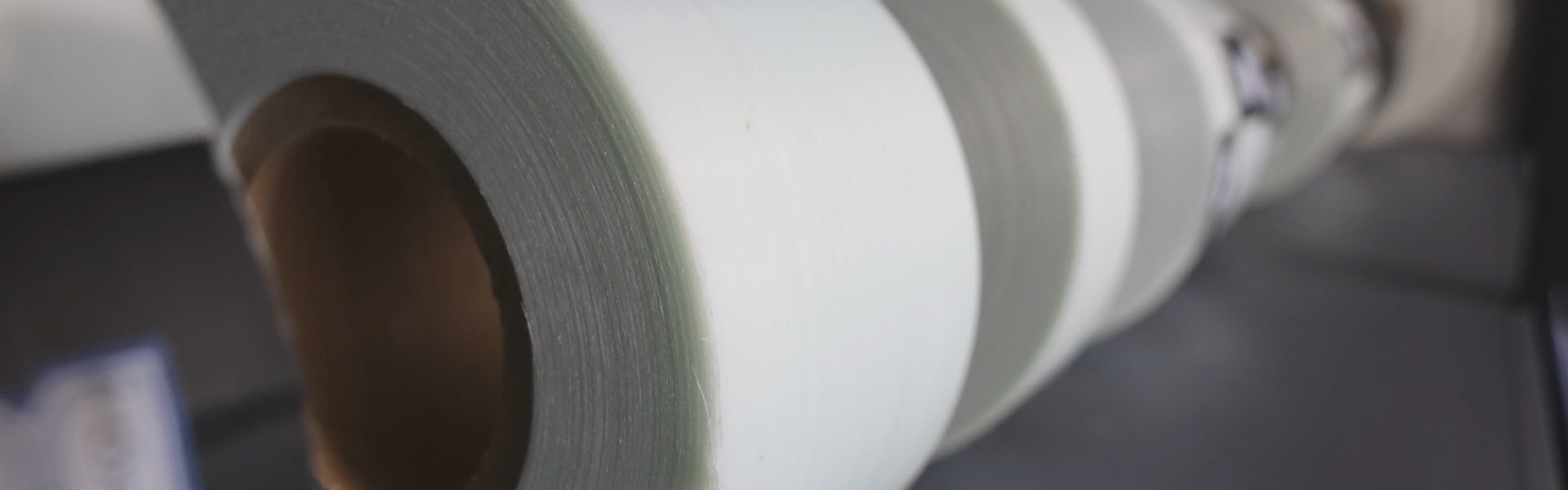
Application of CFRT Prepreg Unidirectional Tape in Lightweighting and Durability Optimization of Ship and Offshore Engineering Structures
Release time:
2025-12-08
Author:
Source:
Introduction
With the development of the global marine economy, unprecedented performance requirements have been imposed on materials for ships, offshore platforms, and offshore wind power facilities. Marine structural components must not only withstand wave, wind, and navigation loads but also possess excellent corrosion resistance, fatigue resistance, and long-term service capabilities. Although traditional steel has advantages in strength, it is plagued by high density, susceptibility to corrosion, and high maintenance costs, making it difficult to meet the lightweight and energy-saving requirements of modern ships. Aluminum alloys and conventional composite materials have achieved certain improvements in lightweight performance, yet they still exhibit shortcomings in durability and fatigue resistance under prolonged exposure to marine environments.
Continuous Fiber-reinforced Thermoplastic (CFRT) prepreg unidirectional tapes, featuring high specific strength, high specific stiffness, corrosion resistance, rapid moldability, and repairability, have emerged as an ideal material for lightweighting and durability optimization of marine and offshore engineering structures. CFRT relies on continuous fibers to provide high load-bearing capacity, while its thermoplastic matrix ensures toughness and impact resistance, enabling hull, deck, and cabin structures to maintain high strength and reliability while reducing weight. This article systematically elaborates on the applications of CFRT in marine and offshore engineering structures from the perspectives of material properties, manufacturing processes, application cases, performance optimization, economic and environmental benefits, as well as future development trends.
I. Lightweighting and Durability Requirements of Marine and Offshore Engineering Structures
Modern marine and offshore engineering structures face multiple challenges related to weight, strength, corrosion resistance, and service life. Hull, deck, and cabin structures are required to bear both static and dynamic loads, including wave impacts, wind forces, and the weight of cargo or equipment. Excessive weight of structural components will increase ship draft and fuel consumption, reduce navigation speed and range, and elevate operational costs.
Meanwhile, the marine environment is characterized by harsh conditions such as high salinity, high humidity, temperature fluctuations, and ultraviolet radiation, which pose severe challenges to the corrosion resistance, fatigue life, and long-term reliability of materials. Although traditional steel structures have high strength, they are prone to corrosion, entail high maintenance costs, and fail to satisfy the lightweight requirements of modern ships. Aluminum alloys and thermosetting composites have certain advantages in lightweighting, but they still have performance limitations under high-cycle fatigue loads and local impact conditions.
The application of CFRT prepreg unidirectional tapes in marine and offshore engineering provides a new approach to addressing the demands of lightweighting, durability, and long-term safety. Continuous fibers laid along the main stress directions significantly enhance the flexural strength, shear strength, and fatigue life of structures; the thermoplastic matrix provides toughness, impact resistance, and repairability, while also possessing seawater corrosion resistance, enabling long-life and reliable operation.
II. Material Properties and Technical Advantages of CFRT
CFRT prepreg unidirectional tapes are composed of continuous fibers and a thermoplastic resin matrix. The continuous fibers are typically selected from carbon fibers, glass fibers, or aramid fibers, which possess extremely high specific strength and specific stiffness, and are capable of withstanding longitudinal bending, transverse shearing, and impact loads on marine structures. Compared with short-cut fiber composites, continuous fibers exhibit superior performance under high-cycle fatigue and extreme load conditions. Through scientific design of fiber layup directions, CFRT components can be locally reinforced for key parts such as ship keels, decks, and bulkheads, achieving a balance between lightweighting and high strength.
The thermoplastic resin matrix plays a pivotal role in CFRT. Thermoplastic resins can be rapidly softened and molded under heating conditions, and damaged areas can be repaired through local heating, thereby reducing maintenance costs. Thermoplastic materials are resistant to corrosion, seawater immersion, and ultraviolet radiation, and are recyclable, in line with the requirements of green manufacturing. The toughness and impact energy absorption capacity of the material improve the safety of marine structures under wave impacts or collision loads, while maintaining excellent long-term fatigue performance.
CFRT boasts remarkable mechanical performance advantages. Continuous fibers provide high stiffness and strength to ensure that structural components can withstand complex loads during ship navigation; the thermoplastic matrix offers toughness and impact energy absorption capacity to prevent the expansion of local damage; the continuous fiber composite structure maintains excellent fatigue performance under long-term vibration and marine environmental exposure, providing reliable protection for marine and offshore engineering structures.
III. Fatigue Life Optimization of Marine and Offshore Engineering Structures
Marine structures are susceptible to fatigue damage due to long-term exposure to wave loads and navigation vibrations. CFRT prepreg unidirectional tapes achieve fatigue life optimization through the synergistic effect of continuous fibers and the thermoplastic matrix. Continuous fibers laid along the main stress directions provide high flexural and shear strength, reducing the initiation and propagation of microcracks; the toughness of the thermoplastic resin absorbs impact energy, lowers the interfacial stress between fibers and matrix, and improves long-term durability.
In the design phase, finite element analysis and digital simulation are widely used for fatigue life optimization. By simulating the stress distribution of hulls under wave, wind, and navigation loads, engineers can identify fatigue-prone areas, and achieve an optimal balance between lightweighting and durability by adjusting fiber layup directions, increasing the number of layers in key areas, or implementing local thickening. This simulation-driven design method ensures that CFRT components maintain long-term structural reliability while achieving lightweighting.
IV. Manufacturing Processes and Technical Implementation of CFRT
The manufacturing technology of CFRT components plays a core role in marine and offshore engineering structures. Automated tape laying technology can precisely control fiber laying direction, layup sequence, and tension, enabling the integrated molding of large-scale hull panels and cabin structures. Multi-axis robots lay continuous fibers along the stress directions of structures, realizing local reinforcement and overall lightweighting.
Thermocompression molding and vacuum-assisted molding ensure full impregnation of fibers with resin, eliminate air bubbles, and improve the density and structural strength of components. Zone heating and local curing technologies can achieve precise control of structures with uneven thickness or complex geometries, reducing warpage and stress concentration. The combination of digital design, simulation optimization, and topology optimization enables hull panels to achieve an optimal balance among lightweighting, strength, and fatigue life.
Intelligent quality control further ensures the consistency of CFRT components. Sensors monitor tape laying temperature, pressure, and tension in real time, machine vision detects fiber laying status, and closed-loop feedback adjusts the tape laying and molding processes, ensuring that each deck, bulkhead, and structural component meets design requirements and complies with safety standards for long-term marine service.
V. Application Cases of CFRT in Marine and Offshore Engineering
In ship structures, hull keels and decks are typical applications of CFRT. Continuous fibers laid in longitudinal and transverse directions provide high flexural and shear strength, and the thermoplastic matrix offers toughness and impact energy absorption capacity, ensuring structural stability during navigation. Through automated tape laying and thermocompression molding, deck and cabin structures can be integrally molded, reducing the number of joints and bolt holes, and improving assembly efficiency and watertightness.
Bulkheads, partitions, and cockpit support structures also adopt CFRT, which can reduce self-weight, increase ship cargo capacity or expand power system space, while ensuring structural strength and fatigue life. Multi-functional composite design combines CFRT with foam cores or fabrics to achieve sound insulation, heat insulation, fire resistance, and energy absorption functions, enhancing passenger comfort and ship safety.
In offshore wind power platforms, CFRT prepreg unidirectional tapes are used for pile foundations, support frames, and cabin structures, achieving a balance between lightweighting and high strength. Continuous fibers provide structural load-bearing capacity, and the thermoplastic matrix offers corrosion resistance and toughness, ensuring the safe operation of platforms under long-term marine environmental conditions.
VI. Performance Optimization Strategies of CFRT
The performance optimization of CFRT in marine and offshore engineering structures is mainly achieved through fiber direction control, layer number and thickness adjustment, and multi-material composite design. Adjusting fiber layup directions according to stress conditions achieves a balance between local reinforcement and overall lightweighting. Optimizing the number of layers and thickness improves the flexural, shear, and impact resistance of key areas while reducing material consumption.
Multi-material composite design is also a key strategy. CFRT can be combined with foam cores, metals, or fabrics to form multi-functional structures with energy absorption, anti-collision, sound insulation, and heat insulation properties, improving overall safety and comfort. The selection of thermoplastic matrices is optimized based on marine environmental conditions to ensure high performance under high humidity, salt spray, and ultraviolet radiation.
VII. Economic and Environmental Benefits
Marine and offshore engineering structures adopting CFRT prepreg unidirectional tapes demonstrate significant economic and environmental advantages. Lightweight design reduces ship self-weight, cuts fuel consumption and operational costs, and improves navigation speed and cargo capacity. High strength and fatigue resistance reduce the maintenance frequency of key components such as hulls, decks, and trays, lowering long-term operational costs. Thermoplastic processing and modular design enhance production efficiency and equipment maintainability, shortening manufacturing cycles and assembly time.
In terms of environmental benefits, lightweight structures reduce fuel consumption and carbon emissions; the recyclability of thermoplastic resins promotes the development of green manufacturing and circular economy, in line with the global low-carbon development strategy for marine engineering.
VIII. Technical Challenges and Solutions
The application of CFRT in marine and offshore engineering structures faces challenges such as complex molding of large-size components, high costs, and strict certification requirements. Zone heating, vacuum-assisted molding, and digital twin technologies can effectively control the molding quality of large-size hull panels and cabin structures. Although high-performance continuous fibers and thermoplastic resins have high costs, overall costs can be reduced through automated production, layup optimization, and material recycling. For standardization and certification issues, it is necessary to establish design, manufacturing, and testing specifications for CFRT in marine and offshore engineering to ensure safety and reliability.
IX. Future Development Trends
The future development trends of CFRT in marine and offshore engineering structures include highly integrated composite structure design, application of intelligent manufacturing and digital twin technologies, multi-functional composite structures, and green circular manufacturing. CFRT can be compounded with metals, foams, and fabrics to achieve integration of lightweighting and multi-functionality, improving the safety, durability, and comfort of marine and offshore engineering. Intelligent manufacturing and digital twin technologies will further enhance production efficiency and component performance consistency, realizing full-process digital control. Material recycling and green manufacturing will promote the low-carbon development strategy of marine and offshore engineering. The development of new high-performance thermoplastic resins will expand the application scope of CFRT, enabling it to maintain high strength and durability under long-term marine environments and complex load conditions.
X. Conclusion
CFRT prepreg unidirectional tapes have significant advantages in the lightweighting and durability optimization of marine and offshore engineering structures. Continuous fibers provide high specific strength and specific stiffness, and the thermoplastic matrix offers toughness and processability, enabling key structural components to maintain high strength, corrosion resistance, and fatigue life while reducing weight. The combination of automated tape laying, thermocompression molding, and digital simulation optimization enables the production of large-size and complex structural components, improving production efficiency and structural performance consistency. Multi-functional integration, material recycling, and green manufacturing strategies endow CFRT with long-term application potential in the lightweighting, high-performance, and sustainable development of marine and offshore engineering structures. With the advancement of material technology, digital design, and intelligent manufacturing, CFRT prepreg unidirectional tapes will become a core material for marine and offshore engineering structures, providing solid technical support for future marine equipment.