
Application of CFRT Prepreg Unidirectional Tapes in Stiffness Control and Dynamic Performance Optimization of Industrial Robots and High-End Equipment Structures
Release time:
2026-01-07
Author:
Source:
Introduction
With the rapid development of the manufacturing industry towards high-end and intelligent directions, industrial robots and high-end equipment are gradually becoming core production units in the modern industrial system. From automotive welding and precision assembly to new energy, battery manufacturing, and aerospace component processing, equipment operating speed, positioning accuracy, and long-term stability have been elevated to unprecedented levels. Against this backdrop, equipment structural materials are no longer just "passive components" that bear loads; instead, they have become key factors directly involved in the dynamic performance and control accuracy of the system.
The main structures of traditional industrial robots and high-end equipment have long been dominated by steel or aluminum alloy. Although these materials have advantages in strength and processing maturity, their self-weight and inertia have gradually become important factors restricting system performance under high-speed motion conditions. The longer the equipment arm segment and the higher the motion speed, the more obvious the vibration, delay, and positioning error caused by structural inertia will be. How to significantly reduce weight while ensuring structural stiffness and strength has become an urgent problem to be solved in the design of high-end equipment.
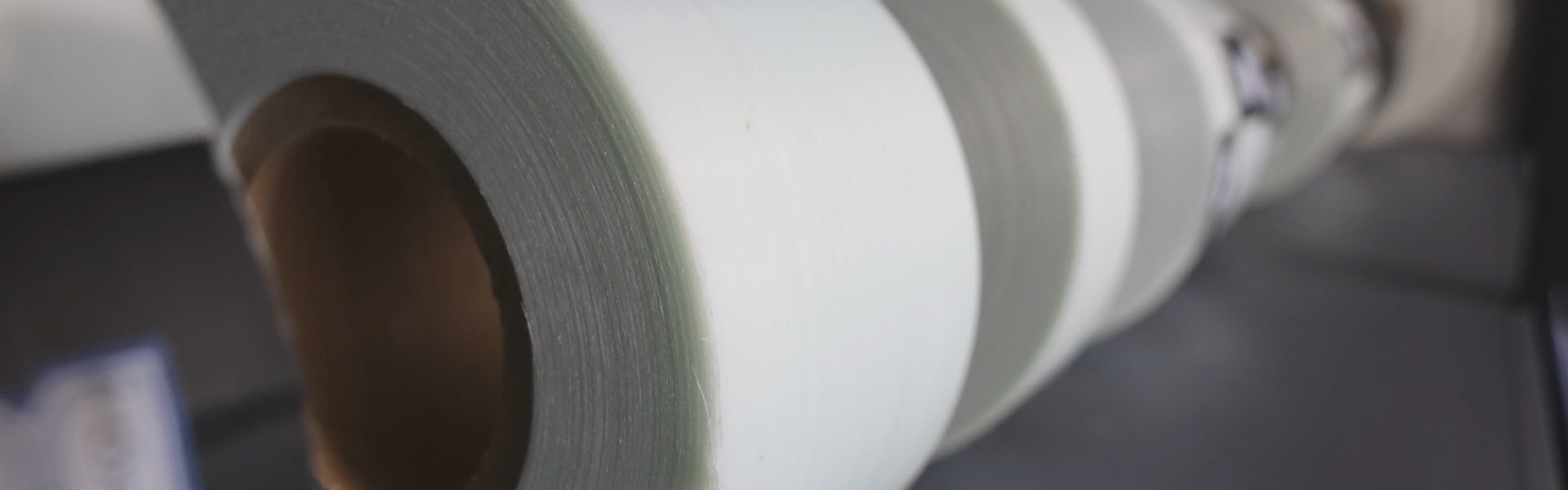
Continuous Fiber-Reinforced Thermoplastic (CFRT) prepreg unidirectional tapes, with their high specific stiffness, high specific strength, and excellent fatigue and damping properties, provide a new technical path for the structural design of industrial robots and high-end equipment. Starting from the dynamic performance requirements of equipment, this paper systematically expounds the application logic, material mechanism, manufacturing process, and future development trends of CFRT prepreg unidirectional tapes in the structures of industrial robots and high-end equipment.
New Challenges of Industrial Robots and High-End Equipment for Structural Materials
The operating conditions of industrial robots and high-end equipment have distinct characteristics. First is high-speed and high-frequency motion. The robotic arm completes acceleration, deceleration, and direction switching in a short time, which puts forward extremely high requirements for structural stiffness and dynamic response. Second is the demand for high-precision positioning. Minor structural deformation or vibration will be amplified into positioning errors of the end effector, directly affecting processing or assembly quality.
In addition, high-end equipment often needs to run continuously for a long time, so structural materials must have excellent fatigue life and stability. Traditional metal materials are prone to fatigue cracks under repeated cyclic loads, and their damping performance is limited. Under high-speed working conditions, vibration attenuation is slow, which affects system stability.
Against this background, simply increasing the structural cross-section or using higher-strength metals to improve performance has been difficult to meet the requirements, and it will instead lead to further increases in quality and energy consumption. The specific performance and dynamic characteristics of the materials themselves have become decisive factors for improving equipment performance.
Material Mechanism and Dynamic Performance Advantages of CFRT Prepreg Unidirectional Tapes
The core advantage of CFRT prepreg unidirectional tapes lies in the high matching degree between their material mechanism and the structural stress and dynamic characteristics of equipment. Continuous fibers are highly oriented in a single direction, enabling the material to have extremely high elastic modulus and strength in that direction. This characteristic is very suitable for structural components mainly subjected to bending and tensile loads, such as industrial robot arm segments, crossbeams, and columns.
Compared with metal materials, CFRT can provide higher stiffness per unit mass, which means that under the premise of meeting the same deformation control requirements, the structural quality can be significantly reduced. The reduction in quality directly leads to a decrease in inertia, making the robot respond faster during acceleration and deceleration, and the control system can more easily achieve high-precision positioning.
The thermoplastic resin matrix endows CFRT structures with excellent damping performance. Compared with metal structures, CFRT can attenuate energy faster after vibration occurs, reducing the duration of vibration. This characteristic is particularly important in high-speed and high-precision equipment, helping to suppress resonance and improve system operation stability.
Stress Characteristics of Industrial Robot Structures and Material Layout Logic
The stress paths of industrial robot structures are usually relatively clear. During movement, the robotic arm mainly bears bending loads, and at the same time, significant torsional loads and inertial moments will be generated during the acceleration and deceleration stages of the joints. The load of the end effector is transmitted step by step to the base along the arm segment, making the upstream structure a key load-bearing area.
The design concept of CFRT prepreg unidirectional tapes emphasizes "laying materials according to loads". By analyzing the stress state of the robot under different working conditions, engineers lay continuous fibers along the main stress direction, so that the material performance is highly consistent with the load path. This design method not only improves material utilization efficiency but also effectively reduces unnecessary quality increase.
In multi-axis robots, the stress characteristics of different arm segments are different. By changing the direction and proportion of fiber layup, customized performance design can be realized for different parts, so that the overall structure achieves the best balance among stiffness, strength, and quality.
Impact of Manufacturing Processes on Structural Performance and Consistency
The application of CFRT in industrial robots and high-end equipment is inseparable from stable and reliable manufacturing processes. Automated tape laying technology is the core means to achieve precise layout of continuous fibers. Through the numerical control system to control the tape laying path, tension, and temperature, continuous laying of fibers along the designed direction can be ensured, avoiding the impact of defects such as corrugation and wrinkles on structural performance.
In the forming stage, hot pressing and continuous compression molding processes can complete the manufacturing of structural parts in a relatively short cycle. Thermoplastic resin has good fluidity when heated, can fully coat the fibers and fill complex mold structures, and solidifies rapidly after cooling. This characteristic is very suitable for the requirements of batch production and consistency of industrial equipment.
In addition, CFRT structural parts still have secondary processing capabilities after forming. Through local heating, structural welding, stiffener forming, or functional component integration can be realized, making the equipment structural design more flexible.
Application Practice of CFRT in Key Structures of Industrial Robots
In practical applications, CFRT prepreg unidirectional tapes have been gradually used in multiple key structural parts of industrial robots. The main beam of the robotic arm is one of the most typical application scenarios. By laying continuous fibers along the length direction of the arm, the structure exhibits extremely high stiffness under bending conditions, while greatly reducing self-weight, significantly improving the acceleration performance and positioning accuracy of the robot.
In large gantry or cantilever equipment, crossbeam and column structures also benefit from the high specific stiffness of CFRT materials. Traditional metal crossbeams are prone to deflection and vibration when the span increases, while CFRT structures can provide higher bending resistance under the same mass condition, effectively improving the dynamic stability of the equipment.
In precision processing equipment, CFRT can also be used for motion platform and support frame structures, using its excellent damping performance to suppress processing vibration and improve surface processing quality and equipment service life.
Collaborative Optimization of Dynamic Performance and Precision Retention
The performance improvement of industrial robots and high-end equipment is essentially a collaborative optimization problem between dynamic performance and precision retention. The lower the structural quality, the smaller the system inertia, and the easier it is for the control system to achieve rapid response; the higher the structural stiffness, the smaller the deformation, and the more stable the positioning accuracy.
With its high specific stiffness characteristics, CFRT prepreg unidirectional tapes reduce quality while maintaining or even improving structural stiffness, providing a material basis for this collaborative optimization. The damping characteristics of the thermoplastic matrix further improve the vibration control effect, enabling the structure to quickly return to a stable state after high-speed operation.
This material characteristic has transformed the equipment design from the traditional "weight increase for stability" mode to a new path of "lightweight + high performance", providing key support for the technological upgrading of high-end manufacturing equipment.
Durability and Long-Term Stability Performance
High-end equipment often needs to operate under high-frequency and high-load conditions for a long time, so the fatigue life and stability of structural materials are crucial. CFRT prepreg unidirectional tapes exhibit excellent durability under cyclic loads. Continuous fibers can effectively bear the main stress, reduce matrix strain, and thermoplastic resin is not prone to brittle cracking during cyclic deformation.
In practical applications, CFRT structural parts can maintain stiffness and geometric accuracy after long-term operation, reducing the need for calibration and maintenance caused by fatigue deformation, thereby improving equipment utilization and production efficiency.
Cost, Sustainability and Engineering Prospects
With the development of automated manufacturing technology, the production cost of CFRT structural parts is gradually decreasing. Through the improvement of material utilization rate and structural integration, the overall system cost can be effectively controlled during long-term operation. At the same time, the recyclability of thermoplastic resin makes CFRT have obvious advantages in the whole life cycle assessment of equipment.
Driven by the trends of industrial intelligence and green manufacturing, CFRT prepreg unidirectional tapes are gradually moving from high-end pilot applications to a wider range of equipment structural fields, providing important material support for the transformation and upgrading of the manufacturing industry.
Future Development Trends
In the future, the application of CFRT in industrial robots and high-end equipment will pay more attention to structural integration and functional integration. By integrating load-bearing, vibration reduction, and functional interfaces into a single structural part, equipment performance and reliability are further improved. At the same time, the deep integration of digital simulation and intelligent manufacturing technology will make fiber layup design more refined, giving full play to material potential.
Conclusion
CFRT prepreg unidirectional tapes provide a technical path that balances lightweight, stiffness, and dynamic performance for the structural design of industrial robots and high-end equipment. Through the efficient load-bearing capacity of continuous fibers and the excellent damping characteristics of thermoplastic matrix, CFRT is promoting the evolution of high-end equipment from "heavy and stable" to "light and accurate". With the continuous maturity of manufacturing technology and engineering experience, CFRT is expected to play a key role in a wider range of industrial equipment fields.
Key words:
Recommended News


Factory address:
North of Chuangye Road, Feicheng Hi-Tech Zone, Tai'an City, Shandong Province, China